The design process of creating Automation suite for Mindtickle
Type
0 to 1, Web app, Strategic
Timeline
2021 (MVP), 2022 (Phase 2),
2023 (Phase 3)
My role
Responsible for the end-to-end design
Team
1 designer, 1 ux writer, 1 product manager, 8+ Devs
About Mindtickle
Mindtickle is a B2B SaaS sales enablement platform that provides businesses with solutions to coach their sales teams. The platform mainly has two user roles: Admins, who are the sales managers, and Learners, who are the sales representatives. Admins are responsible for assigning relevant learning material to the sales reps, tracking their progress, and coaching them to improve their performance.
Business problem
Customers were finding it difficult and time-consuming to create content assignment rules. This involved creating rules logic in Excel, and then sharing it with their success managers for development in the back-end by the support team. The lack of transparency and control caused frustrations and led to slower and inaccurate content assignments.
🤖 Designing an automated way to assign learning content
Problem Statement
Admin users of Mindtickle need to organize learners according to their profiles and assign them content based on performance without the intervention of the support team.
Secondary research
Understanding the pain points of the customers and support team
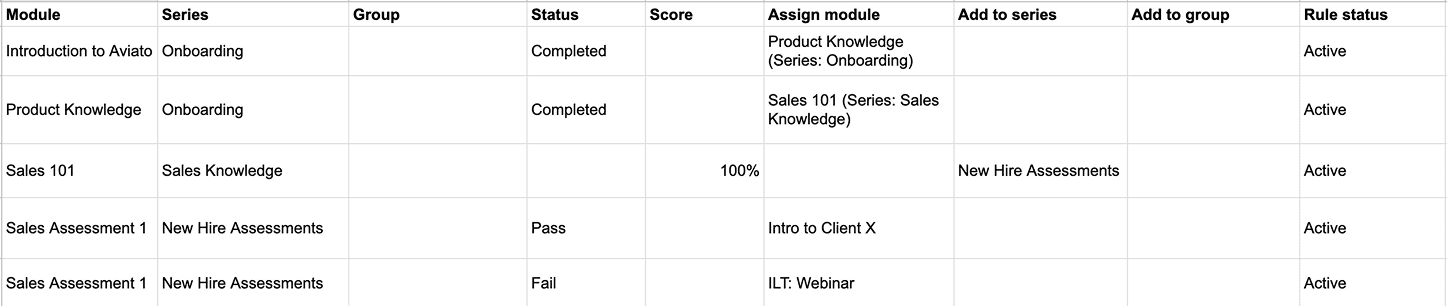
In order to begin the research, I reviewed the rules that were already established by the support team. I also had discussions with the support team and customer success managers to gain an understanding of the types of requests that users typically bring to them.
User research and market benchamarking
Getting hang of the mindtickle platform
Hierarchy and building blocks of the platform.
Automation use cases for every domain, and their complexity.
Business need for every use case.
Insights
Actionable to-dos
The research synthesis gave us some actionable insights to keep in mind while ideating the solution.
Users create simple rules
Majority of the rules were 1:1, “If this happens then do that."
Users do not edit the rules often
An admin does not manages rules frequently.
Users rely on context for rule creation
Admins who are managing content, tend to define rules more often.
Design goals
What do we want to create?
Before moving to ideation, we set design goals to envision the automation platform we wanted to create.
Scalable
Design layout should facilitate easy onboarding of future rules.
Simple
Easy to understand creation flow. Approachable, non-intimidating experience.
Smart
System that can handle complexities in rules. Able to understand the user needs.
Ideation
Design explorations
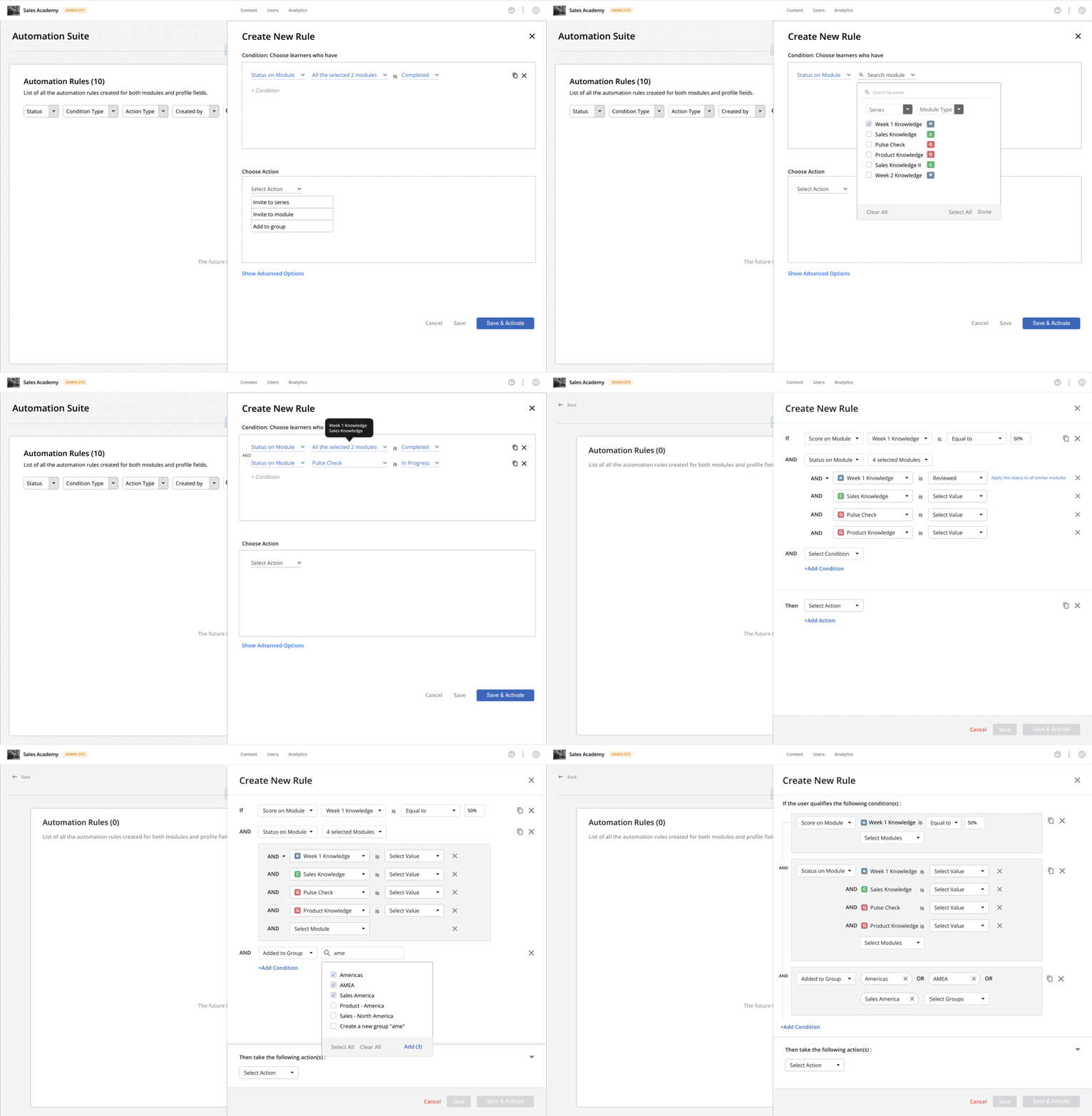
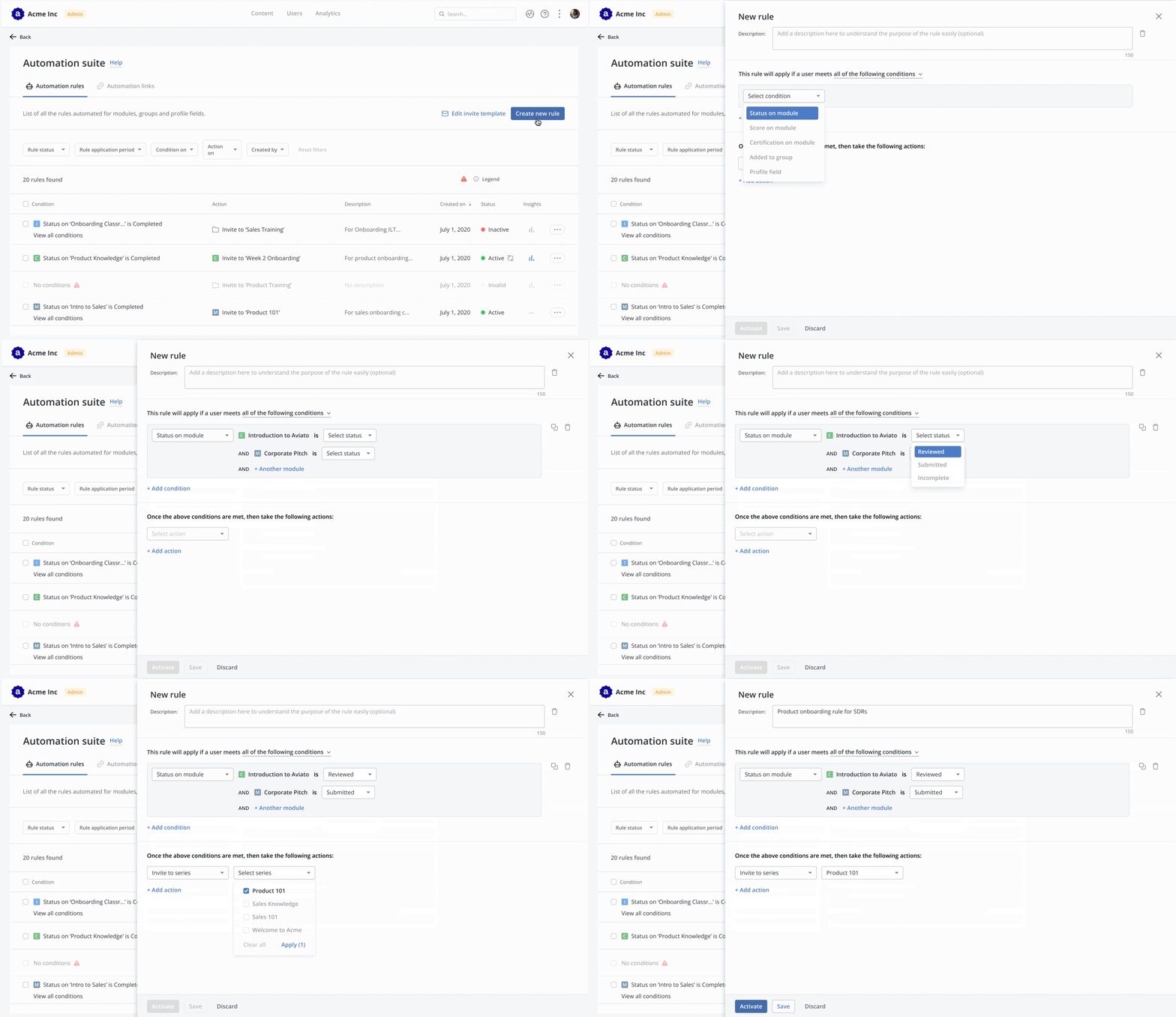
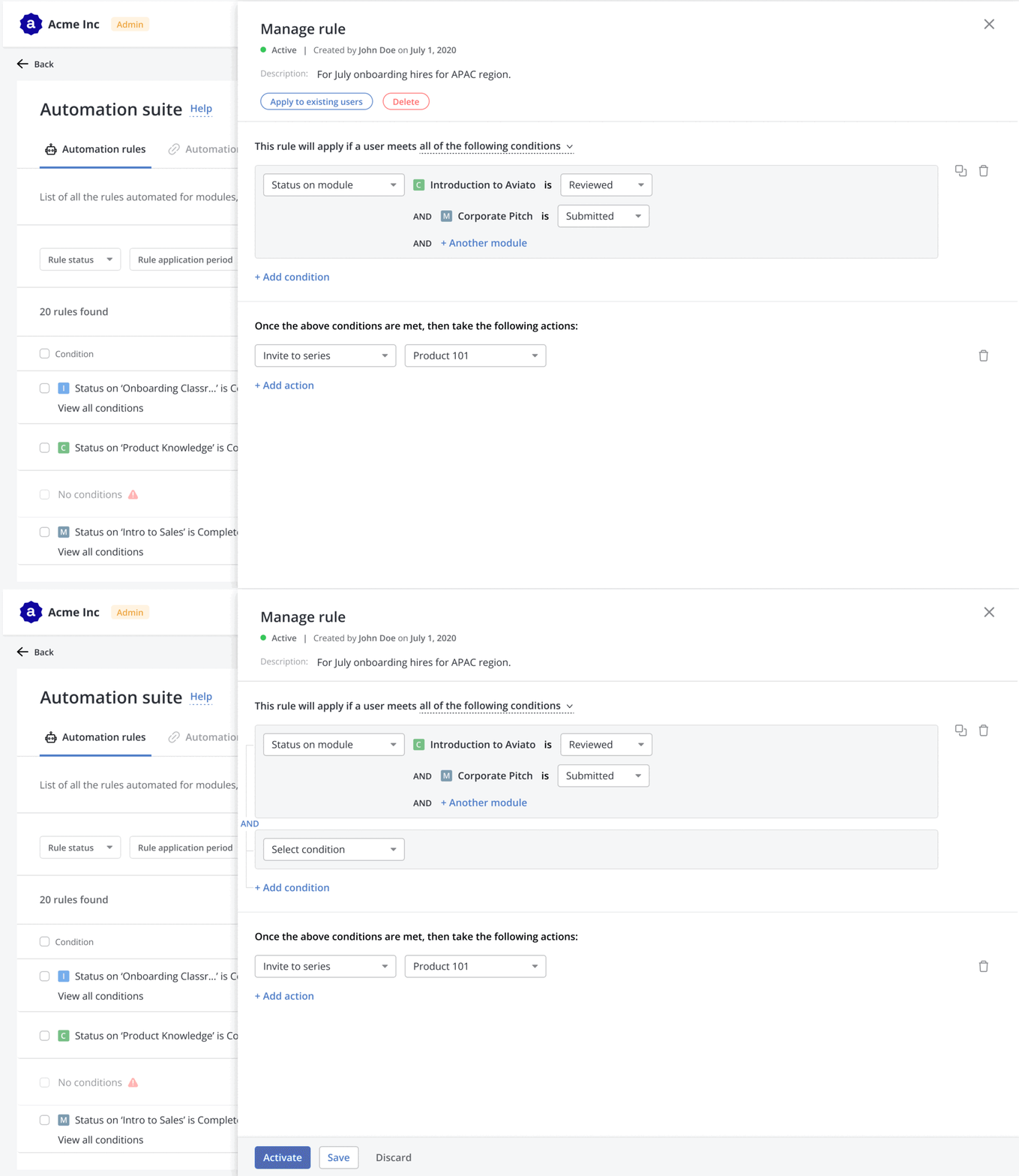
As part of our design process, we created task flows for each user scenario and brainstormed various design options. We noticed that traditional automation platforms were too technical and intimidating, so we aimed to provide our users with a simple experience of creating and managing rules, with minimal clicks required.
Shipping
Releasing the MVP to customer’s delight
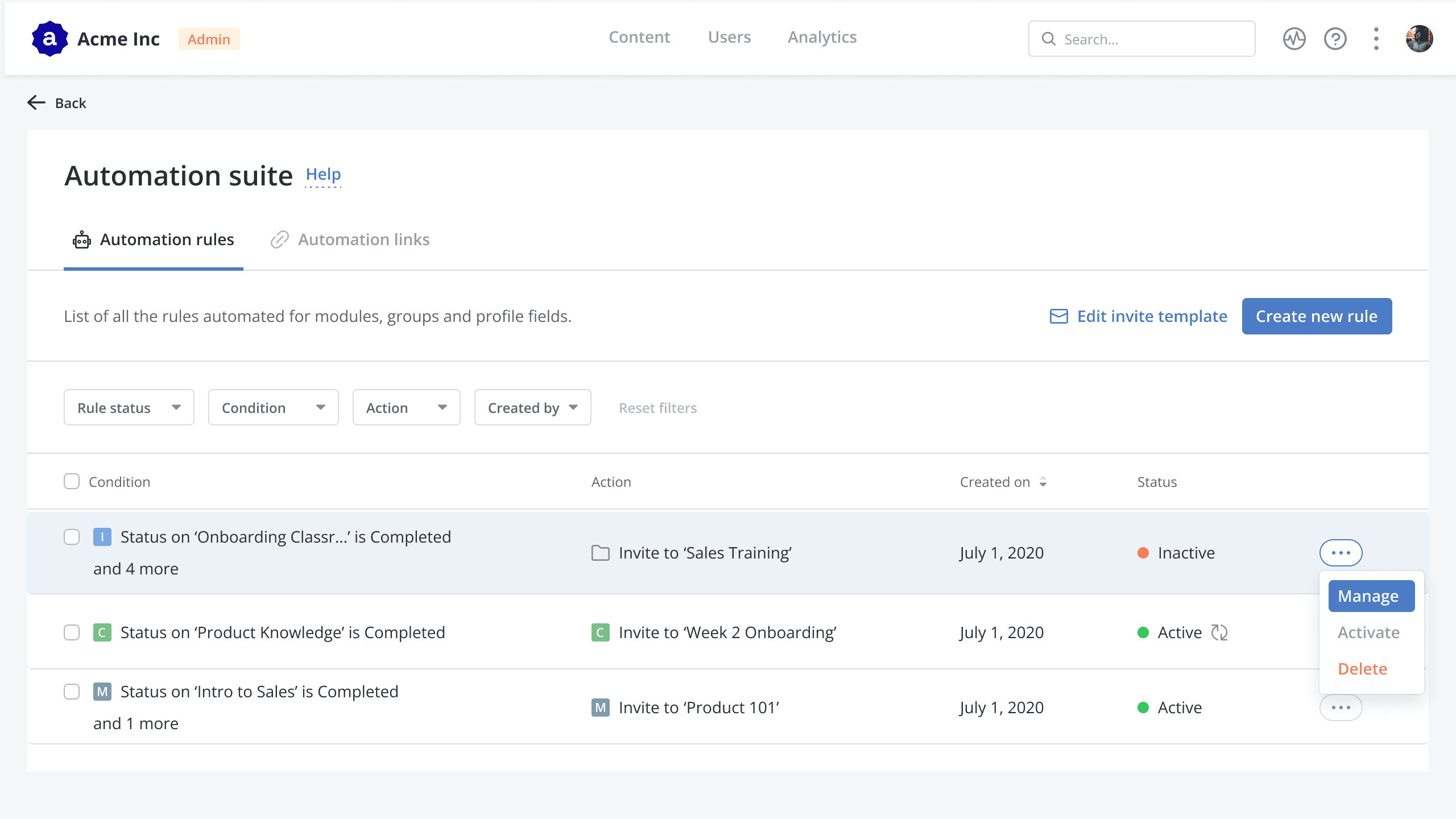
We tested the designs internally with stakeholders and released them in January 2021. Within the first few days, more than 20 of our customers had already adapted to the changes, while the rest gradually moved towards automating their processes over time. The increased adoption of the new designs prompted us to enhance their capabilities and onboard more use cases. If you're interested in learning more about the evolution process, keep reading.
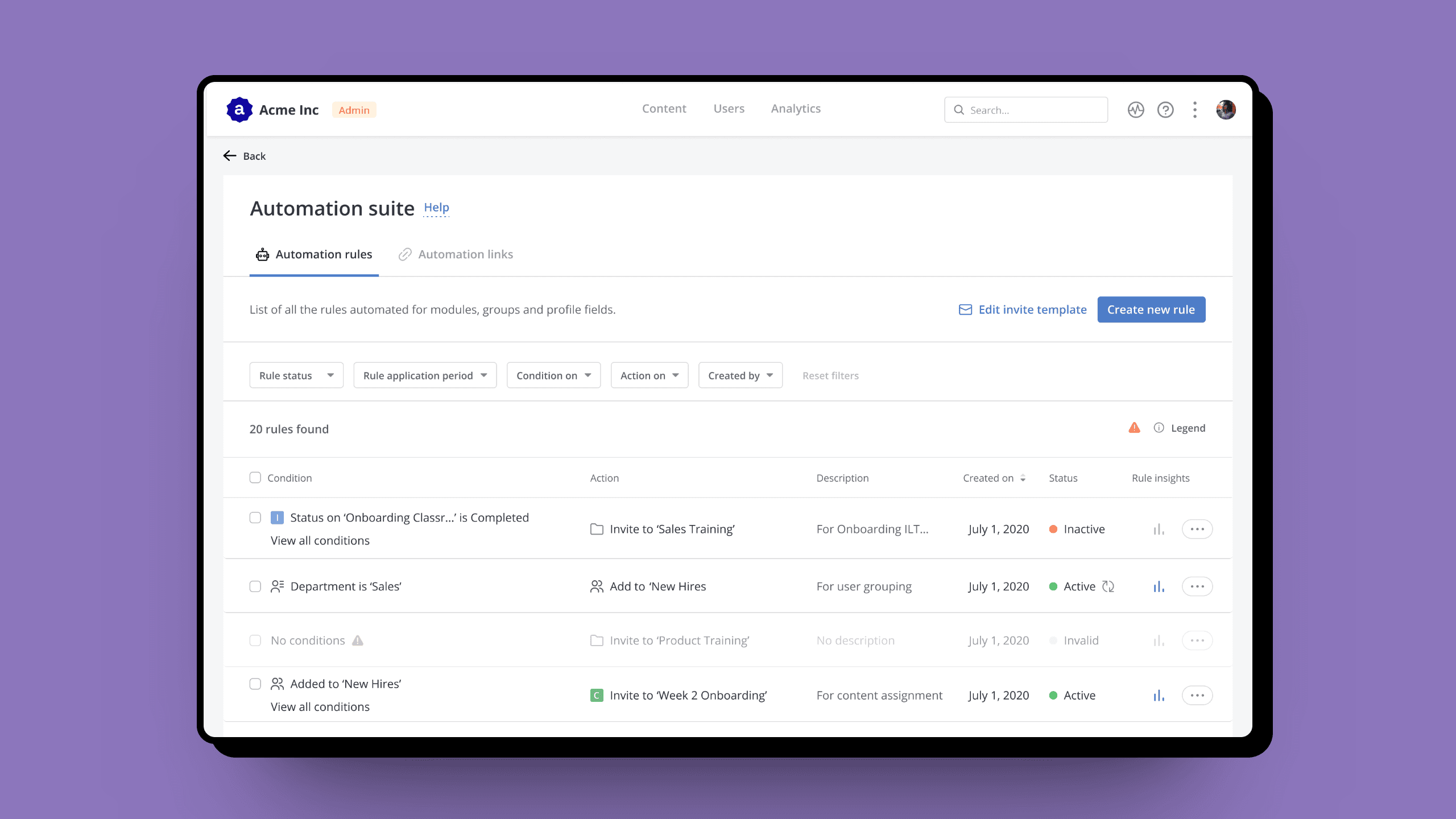
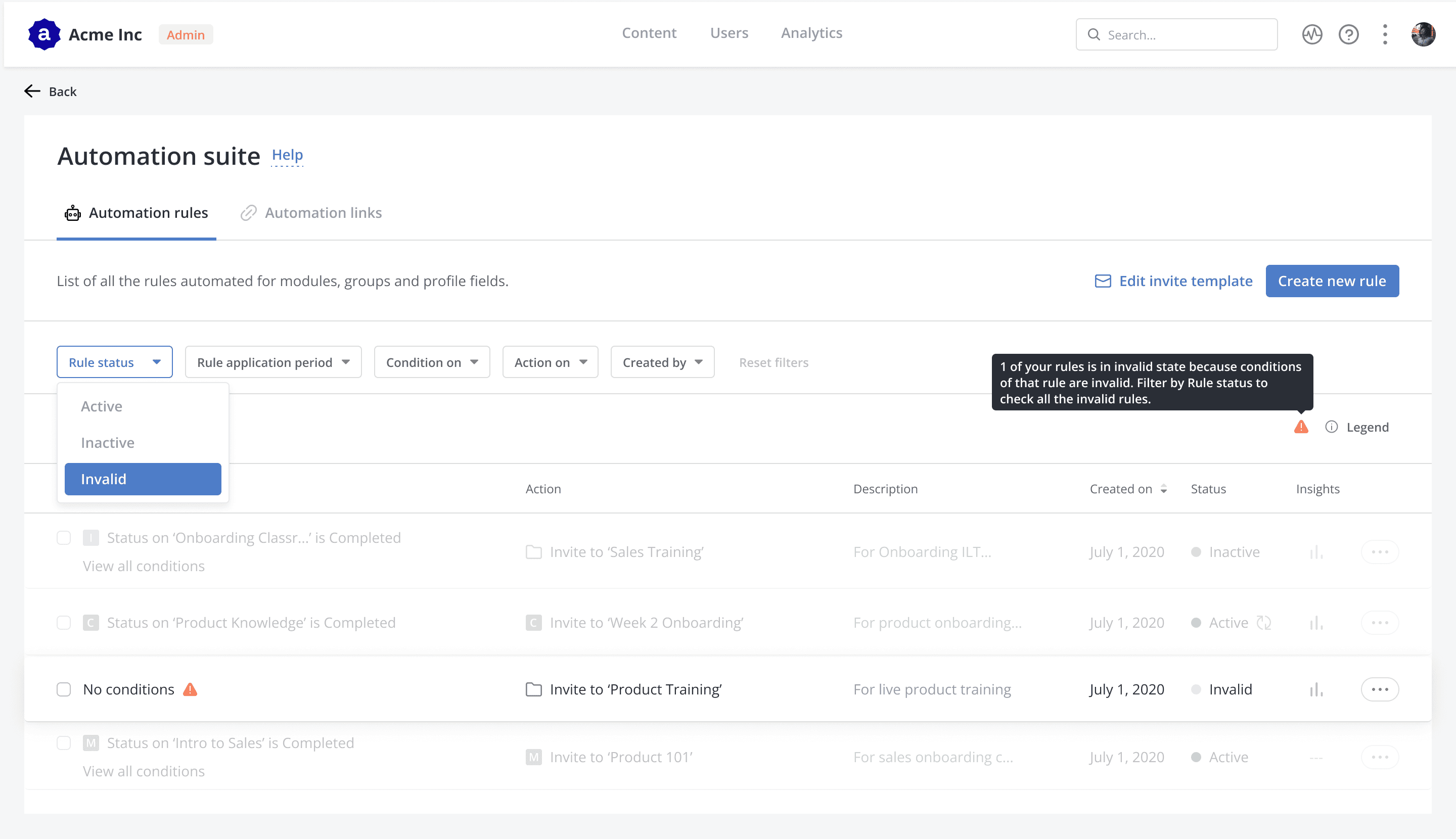
🔍 Making it easier to search and manage rules
The problem
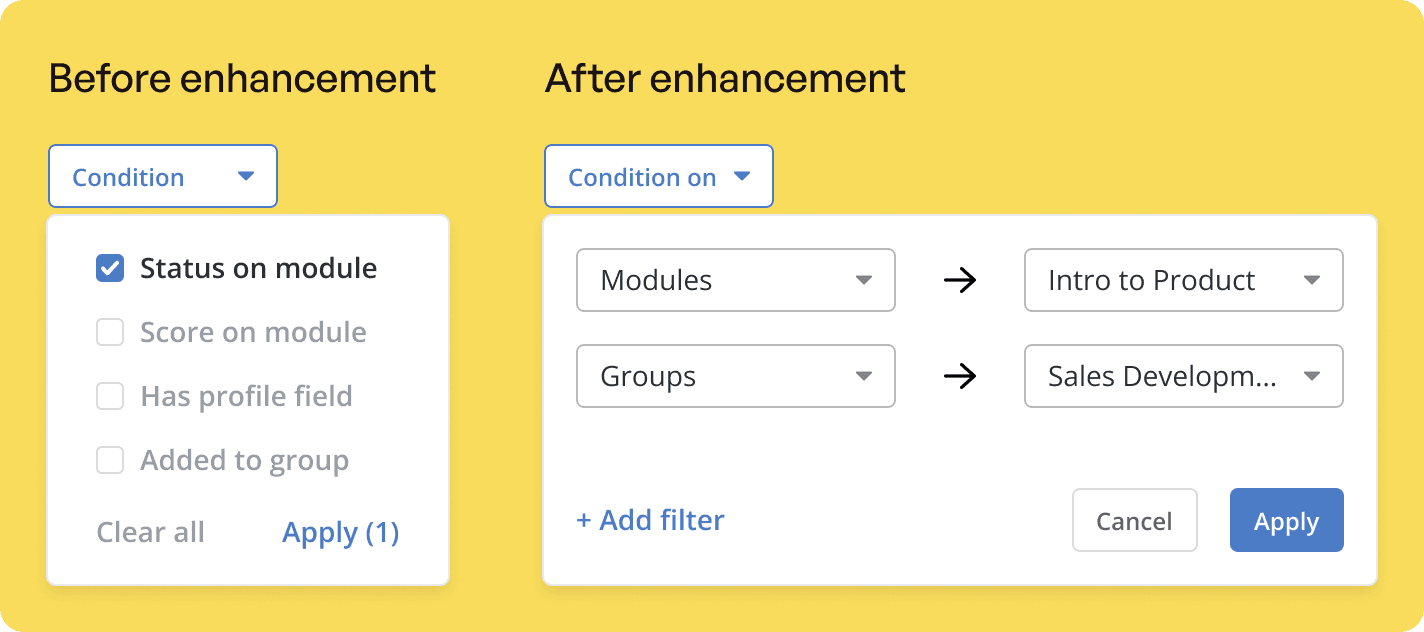
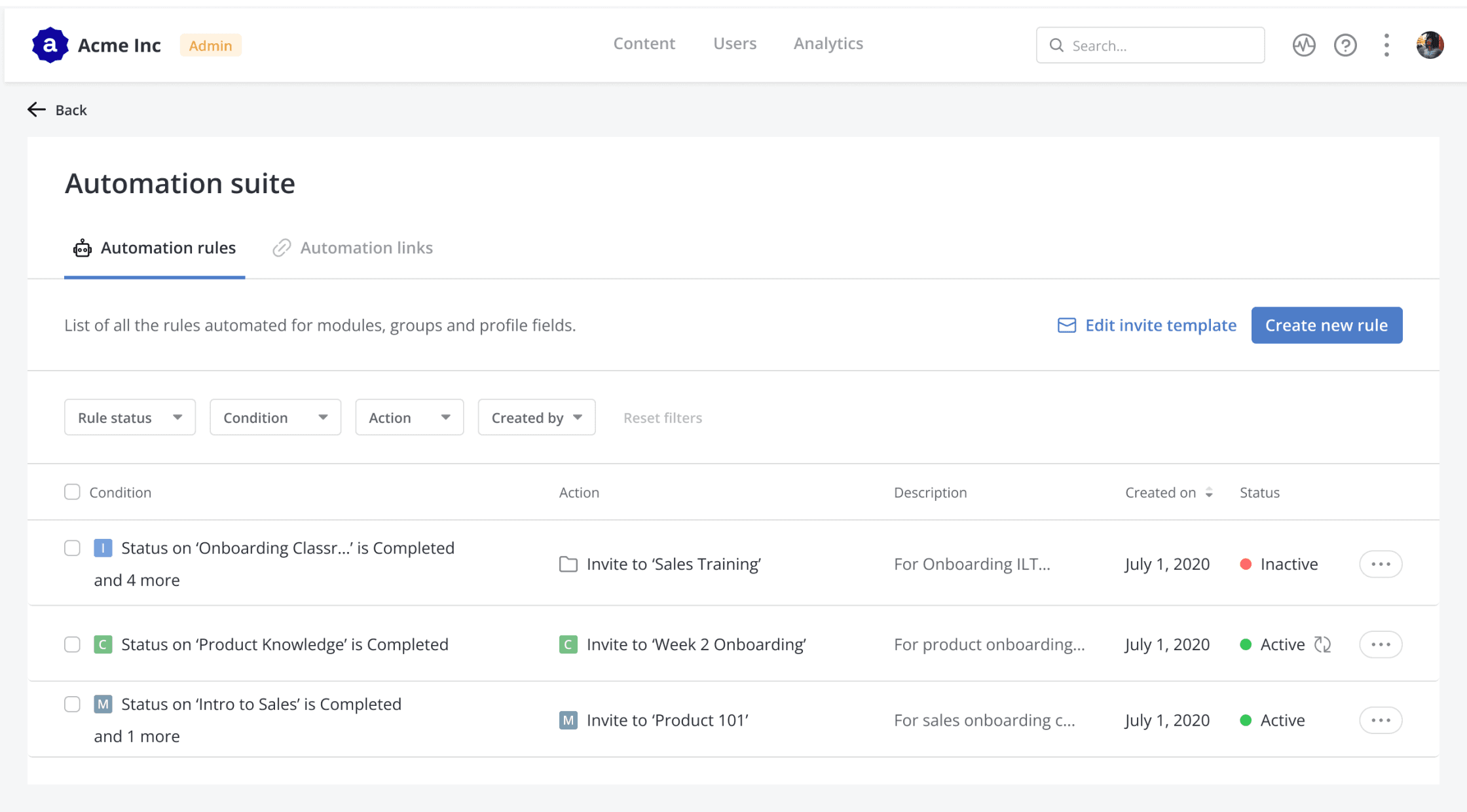
Admin users of Mindtickle want to search for a specific rule and understand its purpose.
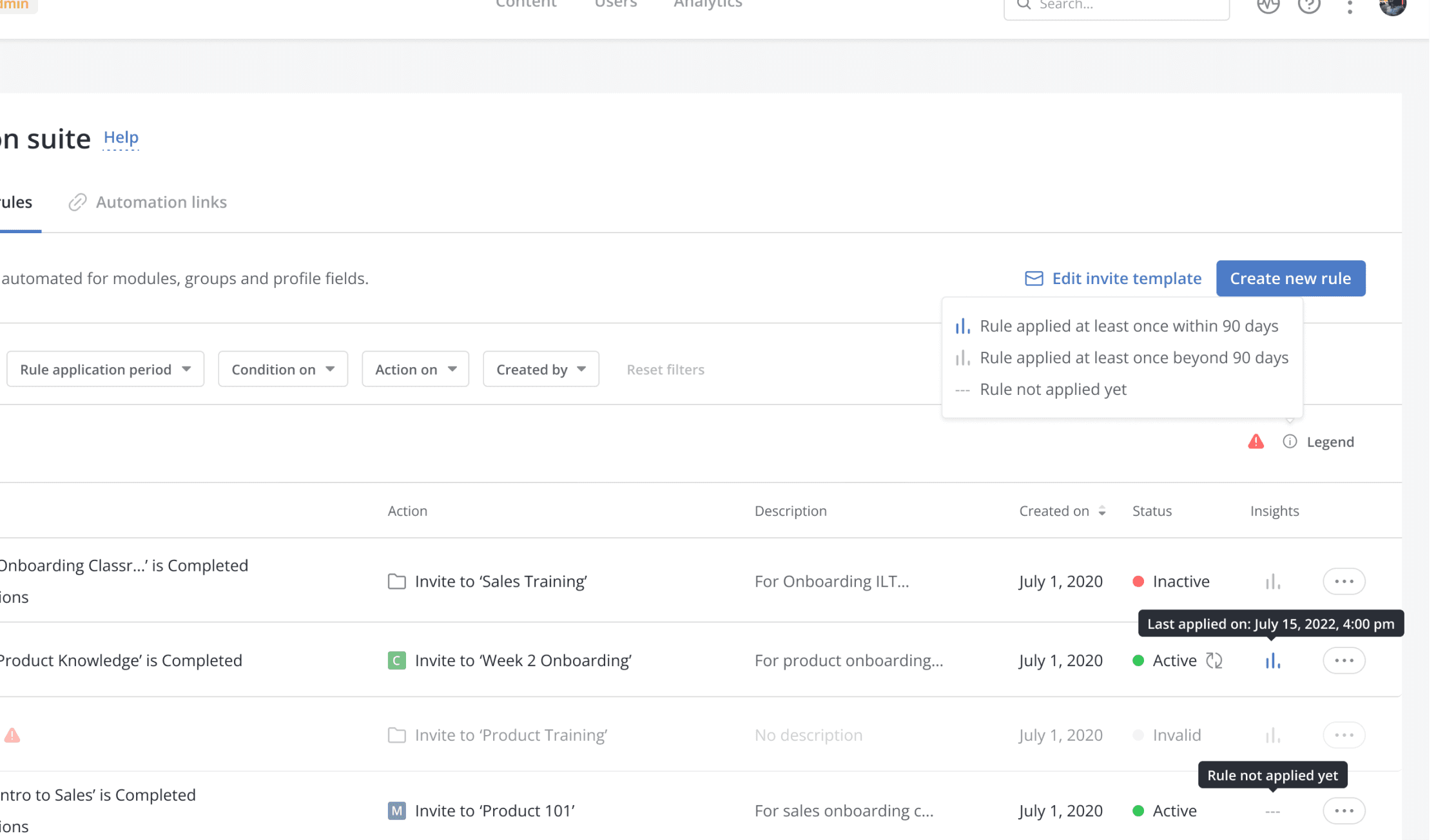
📊 Providing insights into the rules performance
The problem
Admin users of Mindtickle want to track rule effectiveness and identify stagnant ones.
Results
How did Automation impact the Mindtickle business
Insights as of Jan, 2024
No. of customers using
94
As of Jan 5, 2024.
No. of rules created
1520
In 6 months (July 2023-Jan 2024). Out of which 340 are complex rules, with more than 5 conditions.
Conversion rate
27%
As of Jan 5, 2024. Improved from being 19% in the year 2022-23.
Learnings
Beginning of my journey as a product designer
Designing this automation suite helped me understand and design for complex problems and systems.
I realised that a feature takes time to develop and grow, and that an MVP (Minimum Viable Product) may not be sufficient to solve every problem.
Working with developers became easier when I took the time to understand their challenges and define the end goals.
Scaling a design is a delicate process, and it's important to consider this from the beginning of the design process to avoid problems later on.
Thanks for reading!